2020 Honda City

The Honda City is perceived as a fun, agile, and comfortable C2 segment sedan. It was introduced for the first time in the country in 1998. By now, Honda has introduced 4 generations of the City in the Indian market. Now in 2020, Honda has launched the 5th-generation of the City.  With the generation change, it gets a new design, updated powertrain, a revised interior, and addition of some more features

2020 Honda City Review – Exterior

Sedans, in general, possess a 3-box silhouette, and Honda has stayed true to this philosophy while designing the 5th-gen City. It gets a long hood, followed by a proportionately long cabin and boot. There’s no coupe-like roofline here, thus it looks posh than being outright sporty. On the front, the new 9-segment all-LED headlamps are attention-seekers, and in between them, sits a thick-chrome slat that houses the Honda logo.
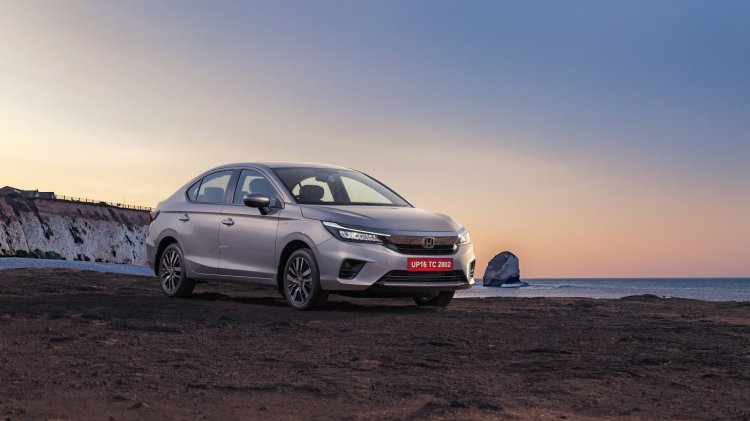
The new bumper boasts of sharp recesses and gets LED fog lamps without any chrome embellishments around them. Now in the new-gen avatar, the Honda City is the widest car in its segment with a width of 1,748 mm. Thus, the front facet of the car looks distinctive with a fair amount of bling on its side. Also, the bonnet gets two sharp creases, which help in hiding away the heft but adding a muscular touch to the front facet.

Moving over to the sides, the first thing that anyone would notice is its length of 4,549 mm. This makes it the longest car in the segment. In comparison to the last-gen model, the 2020 Honda City looks a whole lot different from the sides. The hood line is flat and does not merge with the pillars as cohesively as in the outgoing model. With a height of 1,489 mm, it isn’t the shortest either, therefore gets a large greenhouse area. It gets 16-inch dual-tone alloy wheels, which are borrowed from the RS trim that is offered in the international markets only.

The ORVMs are mounted on the doors and are of a decent size. The tail lamps are wraparound units; they extend all the way to the sides and serve as marker lamps as well. Also, there’s a strong and sharp beltline that connects the headlamps with the tail lamps, giving the side profile some visual drama.

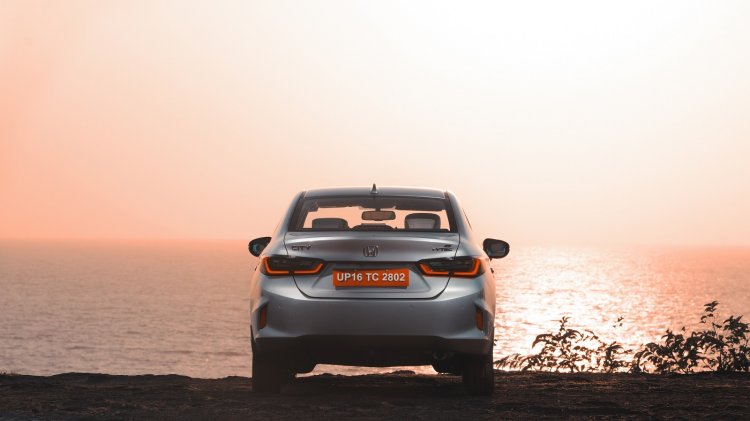
From the rear, the new-gen City looks gorgeous. It gets a set of sleek tail lamps with a Z-shaped LED element inside them, which features a dotted-effect on the sides. Interestingly, Honda has not used chrome on the rear-end, which will have mixed reactions for sure. But, the overall design is wonderfully perceived. The rear bumper gets more creases than the front one and houses 2 reflectors on the extreme edges in a vertically-stacked layout. A roof-mounted shark-fin antenna can also be seen.
2020 Honda City Review – Interior
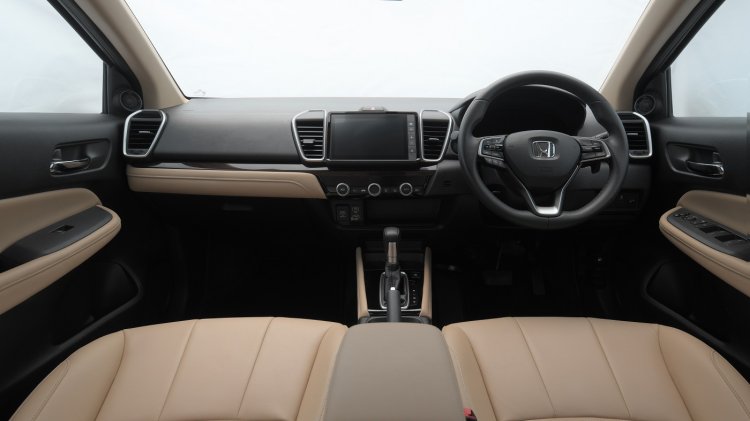
As on the outside, Honda has updated the City from the inside as well. It now gets a new design for the dashboard, which looks much better than that of its predecessor’s. It features a faux wood trim that divides the dashboard into two. The dashboard also gets leather inserts at places. The AC vents are now redesigned and vertically stacked. The dashboard’s top is finished in black to avoid reflection on the windshield. Interestingly, Honda has not used the Digipad 2.0 from the last-gen model here. It gets a new 8-inch infotainment unit, instead.

This new head unit is mounted a little off the centre and features a host of connectivity and compatibility options. It gets Apple CarPlay and Android Auto compatibility along with Alexa Remote Capability. It also works as the monitor for the LaneWatch camera, which is mounted on the left-hand side ORVM. While the touch response of the screen is great, its placement is not the best. Honda could’ve fixed it in a driver-centric fashion and with a volume control knob. In its current position, it is not the best screen to look at on a sunny day. As all that you see is glare and reflection.

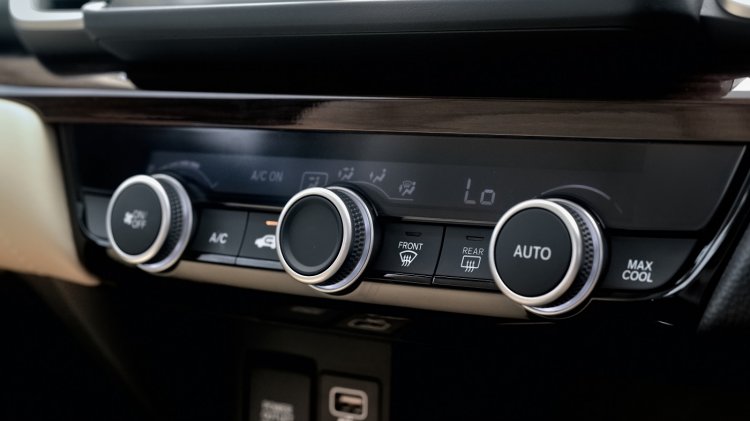
Nevertheless, the sound output of this system is great, courtesy of the 4-speaker and 4-tweeter setup.  Beneath the infotainment unit, now sits the HVAC controls. Thankfully, Honda has not used a touchpanel this time to operate the climate control unit. What you get is a set of physical knobs, instead.
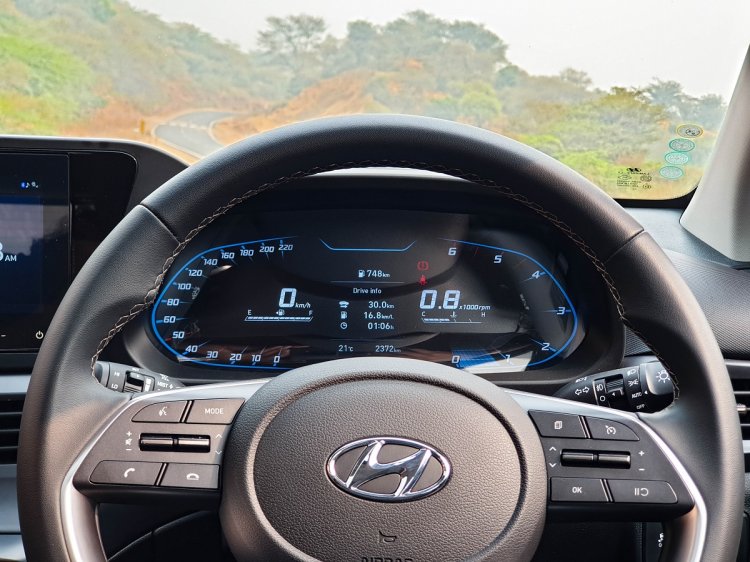
The steering wheel is redesigned unit too. It now gets a hexagonal boss pad and a better layout for the controls. Right behind it sits the instrument cluster, which now gets a 7-inch multi-colour TFT screen along with an analogue speedometer. This configurable display showcases a host of data and information to keep the driver updated with all the stats.

Talking of the storage spaces inside the cabin, they are in plenty. Starting from the door pads, they can accommodate a 1L bottle with ease along with some other essentials. There’s a small coin holder in the dashboard on the driver’s side, whereas the passenger side gets a decent-sized glovebox, which misses out on the cooling functionality here. In the centre console, there are two cup holders along with some space to keep your belongings. Plus, the front-row armrest can also be used to store some small knick-knacks

The interior features a dual-tone black-beige treatment. It helps in accentuating the overall appeal and ambience of the cabin. Also, the seats here are big and supportive. While the squab feels nicely bolstered, the backrests should’ve had lumbar adjustments on the front seats. The rear bench, on the other hand, is the best in the business.

The braking duties on the new-gen City are performed by ventilated discs at the front and mechanically actuated drums at the rear. They are good at stopping the City right in time, without making it lose its composure. But, this is only possible with the ESP working as the guardian angel in the background, since the City rides on a set of low-rolling-resistance Ecopia tyres from Bridgestone.

They are 185/55 R16 in dimensions but lack the grip that is required to enjoy the City’s direct steering, which also offers a lot of feedback. In an age of power-assisted steerings, it is tough to come across a precise and feedback-rich steering system, and the 2020 City gets one for sure. While it is surely light at slow speeds, it doesn’t show any tantrums to gain weight as the speed increases. On the whole, the new-gen City offers a great balance between ride comfort and agility. The only gripe that we had, was the tyres, as Honda could’ve used softer and gripper rubber for the nice-looking 16-inch rims.

The new Audi S5 Sport back

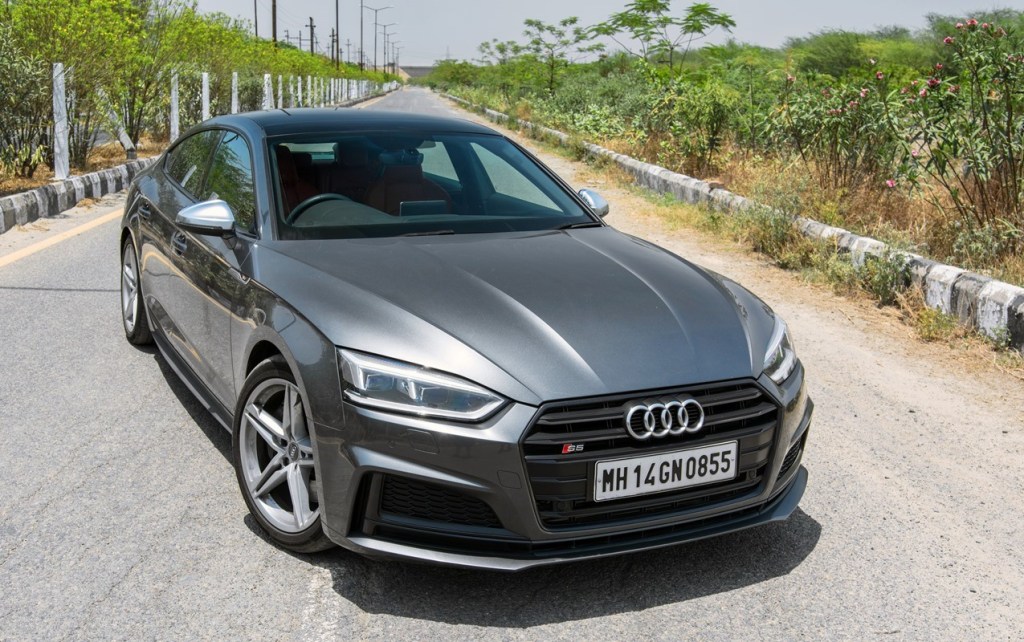
Four-door coupes defy convention. They’re very much here, though, and judging by the growth in their popularity, they’re here to stay. And I’m glad because this segment has given birth to some truly gorgeous cars such as the one you see here. The Audi A5 is for those who think the conventional sedans don’t have enough oomph. The regular A5 comes with a rather practical 2.0 L TDI diesel engine and front wheel drive. For those who want the same amount of show, but a bit more go, there’s the Audi S5.

What does it look like?

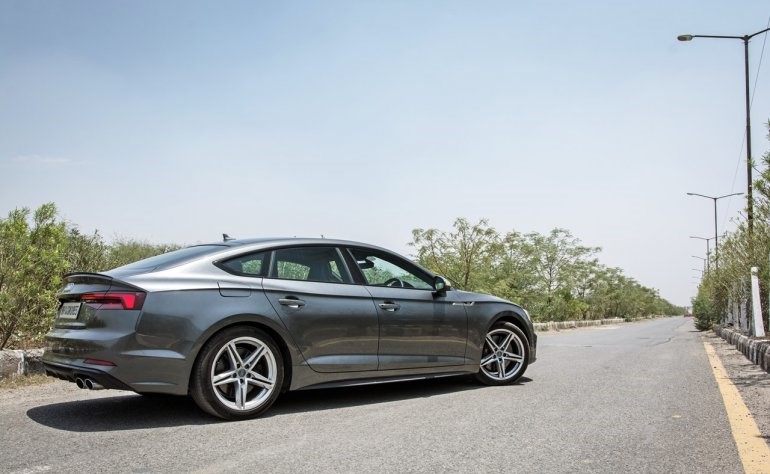
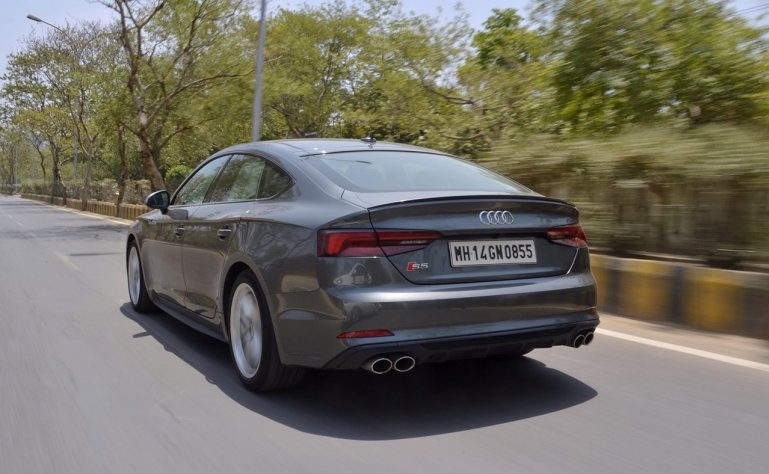
Audi has been, at times, accused of not being adventurous enough with the design of its cars. That may be true, but that same philosophy has worked rather well in case of the S5. The wide, low-set nose coupled with the coupe-like profile ensures the Audi S5 turns heads wherever it goes. Lights up front and at the rear are full LED units. The diffuser integrated into the rear bumper and quad exhaust pipes highlight the car’s sporty intentions and also help differentiate it from the tamer Audi A5.

The test car Audi sent came with the Audi exclusive black styling package, which replaces the chrome on the grille and around the DLO and the silver finish elements on the front and rear bumpers with a gloss black finish. While Audi offers 11 exterior colour options, there’s just one alloy wheel design to choose from – 5-twin-spoke star design 18 inch. I wish they had a few more on offer.

Like I said, the Audi S5 is a beautiful car and I, for one, believe that it can get customers to sign off that hefty cheque based on its appearance alone.

What’s it like on the inside?

The dashboard layout is typical Audi affair with a vent-like element running along its length. There’s a floating display for the infotainment setup and Audi’s signature virtual cockpit present. Keeping in line with the sporty nature of the S5, the colour scheme is dominated by black with a choice of Carbon Twill, Carbon Atlas, or Brushed Aluminium inlays. The one I drove came specced with S Sports seats draped in Magma Red upholstery. For some strange reason, Audi doesn’t offer the S5 with a flat-bottom steering wheel even as an option. I say strange because the A5 Cabriolet comes with one. Anyway, that isn’t really a deal breaker but would have suited the S5 better.

The rear seat space is fairly sufficient for two averaged sized Indian adults. You can squeeze in a third person, but you’ll be better off without one. The 480 L boot can swallow a decent amount of luggage too. Features wise, you get everything you expect from a luxury car including a 19-speaker Bang & Olufsen audio setup, support for Apple CarPlay and Android Auto, 3-zone climate control, massage seats, panoramic sunroof, electric shut tailgate, and more.

What’s it like to drive?

Under the hood lies a 3.0 L turbocharged V6 that develops 354 hp at 5400-6400 rpm and 500 Nm at 1370-4500 rpm. It couple with an 8-speed Tiptronic gearbox sending power to all four wheels via Audi’s Quattro AWD setup. The Audi S5 can crack the tonne in under 5 seconds, 4.7 seconds to be precise, and will go on to hit 250 km/h. Audi’s Drive Select will let you choose from a bunch of preset driving modes or let you alter each setting individually with the ‘Individual’ mode engaged.

The few hours I spent driving the Audi S5 had me grinning ear to ear and desperately yearning for more. Of course, it isn’t as mad as the Audi RS5 probably is, but it still gathers speed rather quickly without breaking into a sweat. There isn’t any noticeable lag present and the 8-speed transmission does a commendable job of shifting through the gears quickly. Oh, and the Audi S5 is a sweet sounding machine with the quad pipes serving up a tasty exhaust note. Its handling is sharp and although products from some of Audi’s rival brands have more communicative steering setups, the one in the Audi S5 does in no way detract from the fun.

Also Read – Audi A5 Cabriolet review

Onboard electronics and Quattro AWD will help even the unskilled push the S5 hard. Despite the cars sporty credentials, the ride, quite remarkably, is comfortable thanks to the S-specific damper control. The firmness you would generally expect from such a product is not there and that is truly impressive. It also means that the Audi S5 can be used just as well as a daily driver.

Should you buy one?

The Audi S5 retails for around INR 72 lakhs (ex-showroom). There are quite a few options at this price point, but if you are considering buying the S5, then chances are you’re not going into the selection process with a very practical approach. Keeping that in mind, the only real rival according to me is the Mercedes-AMG C43. What works in Audi’s favour is it is much more flashy in terms of appearance and will not be mistaken for a four-door sedan.

But if flashy is all you are looking for then why not save 17 odd lakhs and just go for the A5 instead? Well, because the S5 offers a more rewarding driving experience. It’s quicker and, for what its worth, sounds much better. If you want head-turning looks and performance to match, then the Audi S5 makes a lot of sense.

ModelPrice (ex-showroom India)
Audi S5 SportbackINR 72,41,000
Audi S5 Sportback specifications
Engine2,995 cc turbocharged V6 petrol
Power354 PS @ 5,400-6,400 rpm
Torque500 Nm @ 1,370-4,500 rpm
Transmission8-speed dtiptronic with DSP and sport program
Acceleration (0-100 km/h)4.7 s
Top speed250 km/h
Fuel tank capacity58 L
Kerb Weight1,790 kg
Length x width x height4,752 x 1,843 x 1,384 mm
Wheelbase2,825 mm

Audi India’s A5 range also includes the A5 Sportback (INR 55,40,000), A5 Cabriolet (INR 69,24,000), and the RS 5 Coupe (INR 1,10,65,000). Audi’s performance oriented lineup also includes the Audi RS6 Avant, Audi RS7 Sportback, RS7 Sportback Performance, Audi TT, and the Audi R8.

2020 Hyundai i20

Hyundai i20 has been in the Indian market for almost a dozen years now. It was launched for the first time in the country in 2008. In 2014, the second-gen model of the car was introduced. Now in 2020, the South-Korean carmaker has rolled out the third-gen model of the premium hatchback. It now misses out on the Era trim, which used to be the entry point for the i20’s variant line-up, and therefore, prices start at INR 6.79 lakh.

2020 Hyundai i20 – Exterior

First glance at the all-new Hyundai i20 is enough to showcase its European design elements. Hyundai, however, is a South-Korean brand, but the third-gen i20 looks European from all angles. A big reason for this trait is the market that Hyundai is targeting with the all-new i20. Although, in its India-spec avatar, it features slimmer front bonnet and a new radiator grille to measure under 4 meters in length.

From the front, it looks sporty. Thanks to the massive radiator grille, upswept headlamps, and sharply-designed foglamp housings. Also, the bonnet gets tight creases that accentuate the sportier appeal of the front facet. On the sides, the i20 gets a proportionate silhouette that is perfect enough to lure a lot of young buyers. The 16-inch diamond-cut alloy wheels look inspired from the Verna, but they are actually chiral to the Verna’s. The rear fascia of the i20 feels youthful too. The Z-shaped tail lamps connect via a reflector strip, which has been infused with a slim chrome ribbon.

The all-new i20 also comes with piano-black side skirts, rear diffuser, and front lip. These elements give it a low slung appeal but without adding a lot of visual bulk. Sadly, Hyundai has omitted out the all-LED headlamps on the India-spec model. It gets LED-projectors, instead. The foglamps are projector units as well, and they get LED lighting elements, which isn’t all that great at illuminating surrounding when it’s foggy. Interestingly, the ORVMs are sleek and are inspired by a German car brand. Overall, the new-gen i20 looks modern and youthful from all angles.

2020 Hyundai i20 – Interior

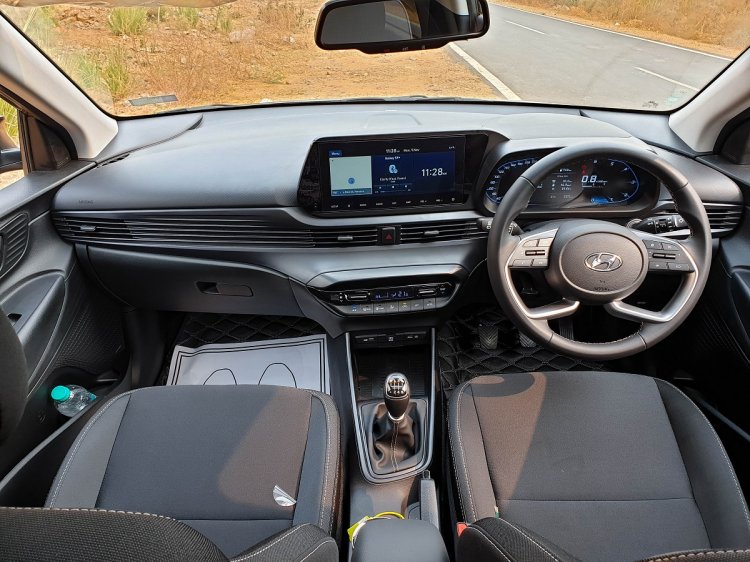
In the past generations, the Hyundai i20 has managed to hold the top spot in terms of the interior’s look and feel. Thankfully, Hyundai has managed to stick to the suit this time as well. The i20 now gets an even more upmarket cabin with a premium ambience. The dashboard layout feels modern and borrows a lot of design elements from a slew of German brands. The most noticeable of all are the AC vents. They feature an uncluttered layout. The climate control button housing is neatly integrated, and using it isn’t a task either.

The instrument console is an all-digital unit and is similar to that seen on the bigger Verna. Moreover, the plastics feel good enough for this price point. The same can also be said for the fit and finish levels as well. Talking of the features, the i20 comes equipped with bucket loads of them. It gets a 10.25-inch touchscreen infotainment unit that offers Android Auto and Apple Carplay compatibility, 7-speaker Bose sound system, electronic sunroof, air purifier and more.

In terms of space, the new-gen i20 now scores better than its predecessor. The wheelbase is longer by 10 mm, which has surely helped the designers in extracting lot more knee room and legroom for the passengers. The shoulder room with three occupants in the second row, however, is inadequate. But, there’s an armrest that can be dropped down to seat two in utmost comfort. Sadly, it misses out on cupholders.

The seats on the i20 are big and supportive. Long hauls would surely be a breeze in them. Cubbyholes, there are many. Moreover, there is a dedicated place for your smartphone, which also offers wireless charging and cooling functionality. And, so is the case with bottles. Lot of them can be placed in the cabin, while a couple of them can be stored and chilled a bit in the cooled glove box.

2020 Mahindra Thar

Mahindra has been keeping the off-road enthusiasts entertained for well over a couple of decades now. The homegrown carmaker started to do so with the licensed Willy’s CJ3B Jeep, followed by its successors – MM540, MM550, Classic, Legend, and Thar. While other models have been great at making people follow the sport of going off-road, the Thar has helped the brand with increased accessibility. Thanks to its better everyday usability. Well, after being on sale for around a decade now, the Mahindra Thar has finally received the much-needed generation change

 2020 Mahindra Thar – Exterior

In the new-gen avatar, Mahindra Thar looks modern, while it continues to keep the last-gen model’s retro charm intact. This change comes up as a well-perceived evolution. Moreover, some might feel that 2020 Mahindra Thar and the Jeep Wrangler are a cut from the cloth. Well, they are, and they have to, because they carry forward the pedigree of the legendary Willy’s Jeep. However, not even one panel of the Thar is identical to that of the American off-roader’s.

With the new and upscaled front-end, Mahindra has modernized the Thar. Also, it packs in some Jeep elements, like the round headlamps and a functional radiator grille. The latter, however, looks a little out of place. The bonnet now features some creases and indents. The metal fenders here are a part of the body, and thus, help the 2020 Thar differentiate itself from its distant American cousin. They also house the LED DRLs and turn indicators

On the sides, the silhouette has been updated but looks familiar. Also, it is now available with a hardtop or a convertible soft top. Depending on which the silhouette changes a little. The most welcoming change here, however, are the 18-inch alloy wheels. The bigger rims fill the wheel wells nicely. Also, the wheel arches are of different shape at both the ends. The front ones are squared-off, while the rear ones are circular. To enter the cabin with ease, there are nice-looking footsteps too.

With a 2-door layout, the Thar measures 3,985 mm length. It is 1,855 mm wide and 1,896mm tall. These dimensions help it with some notable road presence. The rear fascia of the 2020 Mahindra Thar packs in the old charm but with a new dual-tone bumper and LED tail lamps. The spare wheel continues to sit on the tailgate, which opens sideways. Interestingly, the rear windscreen on the hardtop variant comes with a defogger as well. The bumper houses parking sensors, but there’s no back-up camera, which is a must on such a vehicle. On the whole, the 2020 Mahindra Thar’s design is a great upgrade over the last-gen model. And it won’t be wrong to say that Thar has finally started to follow the route of modernism.

2020 Mahindra Thar – Interior

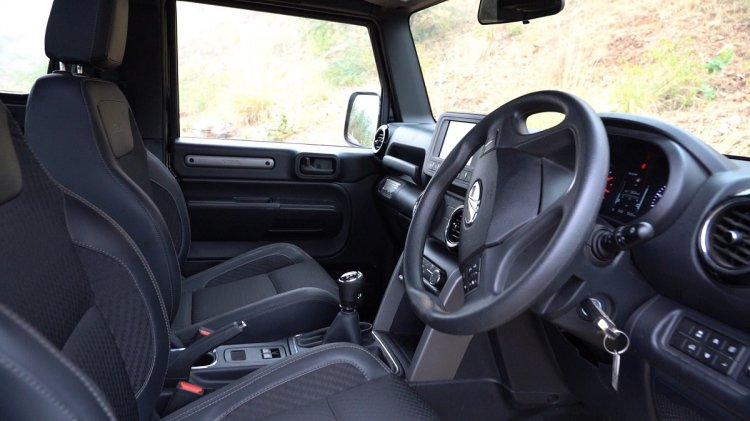
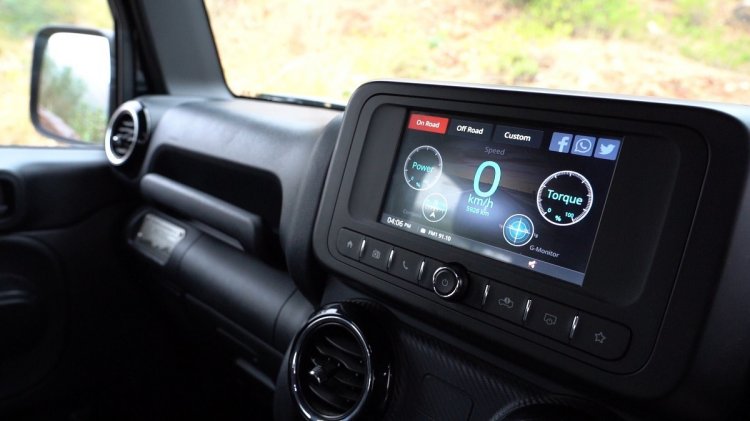
With a ground clearance of 226 mm, the 2020 Mahindra Thar sits quite high from the ground. Thankfully, kind folks at Mahindra have fitted it with a set of side steps to make the cabin access a bit easier. Once inside, the new cabin impresses with its design and fit-finish levels. The dashboard is a new unit and looks appealing. Also, it boasts of IP54 dust and water resistance rating. In the centre, it houses circular AC vents and right beneath them sits the 7-inch infotainment unit that comes with Android Auto, Apple CarPlay, and satellite navigation. Also, the climate control knobs sit below the screen, along with an array of toggle switches.

The steering wheel is a direct lift from the TUV300, and therefore, it now houses audio and cruise control buttons. Behind the steering wheel is an easy-to-read instrument binnacle, which also gets a multi-information-display. On the passenger side, the dashboard comes with a grab handle. There is a rather tiny glovebox as well, which is lockable. On the lower part of the dashboard, Mahindra folks have fitted a pair of speakers. And the remaining two units are fixed on the roof. Together, they offer good sound output.

Unlike the last-gen model, 2020 Thar comes loaded with features. The list includes power windows, power-adjustable and foldable ORVMs, remote locking and more. While the ORVM controls on the driver’s door, the power-windows switches are in the centre console. We felt that getting used to their position might take forever. Mahindra claims that the doors on the Thar are removable, and for the same reason the windows switches have been moved. This justification does not sound convincing at all since the mirrors controls are already there on the doors.

In terms of space and seat comfort, the 2020 Thar feels superior as well. Front seats offer generous support to humans of all shapes and sizes. They come with lumbar-adjustment as well. With a tilt-adjustable steering column on board, finding a perfect driving position in the Thar is easy. The second-row seats are designed for two occupants, and they can recline to a pretty decent angle. They sit higher up the floor as well. However, ingress and egress for the second-row occupant is surely a task. Thus, they are better left folded flat to get some additional boot space, because the 2020 Thar doesn’t get any with the second-row of seats in place. In summation, the Thar’s interior is now car-like. It is comfy, and four adults can spend hours here. Moreover, the occupants will stay safe, thanks to the 4-star Global NCAP crash test rating.

2021 Mahindra XUV300 AutoSHIFT

The sub-4m compact-SUV space has been witnessing a new launch almost every month. This time around, it is the introduction of a new transmission option on the turbo-petrol trims of the Mahindra XUV300. Until now, the petrol trims of the indigenous sub-4m compact-SUV were on sale with a 6-speed manual gearbox only. However, Mahindra has now realized that the unavailability of an automatic gearbox with the turbo-petrol motor was a deal-breaker for many. And the brand has now introduced the option of AutoSHIFT gearbox (6-speed AMT) with the turbo-petrol engine of the Mahindra XUV300.

2021 Mahindra XUV300 AutoSHIFT Review – Exterior

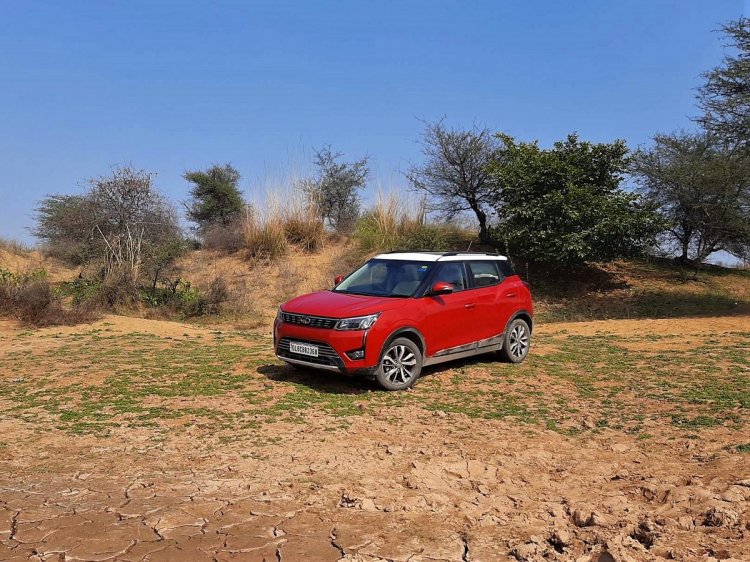
Design-wise, the Mahindra XUV300 is a handsome-looking car. However, the rear-end isn’t the most gorgeous of the lot, as Mahindra had to trim the original car (SsangYong Tivoli here) to make the XUV300 fit in the sub-4m bracket. On the front, it sports a good-looking nose. Thanks to the slim radiator grille, which is flanked by sleek headlamps. Also, Mahindra has sensibly used chrome here, and hence, the XUV300’s front facet is one of the most attractive ones in the segment.

Moving towards the sides, Mahindra XUV300 shows off its long hood and 17-inch diamond-cut alloy wheels. Moreover, the chunky wheel arches add the right amount of heft to the XUV300’s side profile. From the sides, the rear-end feels upright and disproportionate. However, it doesn’t look all that odd when viewed from the right direction. The taillamps seem to be inspired by a Maserati of the modern era. Also, there are enough creases to break the visual bulk.

Talking of the changes that Mahindra XUV300’s petrol trim get with the AutoSHIFT gearbox, it is the ‘AutoSHIFT’ badge itself, which sits on the tailgate. While this badge will differentiate the manual variants from their automatic counterparts, it isn’t a big change by any means. Mahindra could’ve used a different design for the alloy wheels here to freshen up the things a bit.

2021 Mahindra XUV300 AutoSHIFT Review – Interior

With the introduction of the new AutoSHIFT gearbox, the Mahindra XUV300 gets a handful of changes on the inside. The first and foremost is the new gear lever. Okay, this is obvious. But what’s not obvious is the addition of the BlueSense connected car suite. Mahindra has now started to offer the XUV300 with its new connected car tech, which aids the user with accessibility to the car’s odometer reading, fuel level, engine oil level, and some location-based functions via a smartphone or a smartwatch. The owners can use the geofencing technique to limit the car’s use in a designated area only. Also, the AutoSHIFT badge on the Mahindra XUV300 will come along with an electronic sunroof. The option of this AMT gearbox will be available on the W6 and W8(O) variants. And these trims will now have the electronic sunroof as a standard fitment.

While these changes have added a sense of fresh air in the Mahindra XUV300’s cabin, this sub-4m compact-SUV is quite a loaded car. It comes equipped with dual-zone climate control, auto-dimming IRVM, rain-sensing wipers, automatic headlamps, steering modes, cruise control and more. Furthermore, it is the safest Indian-made car. The Mahindra XUV300 boasts of a 5-star Global-NCAP crash test rating. It gets a slew of safety aids on-board, such as ABS with EBD, ESP, TPMS, front & rear parking sensors, rear parking camera, 3-point seatbelts for all seats, front & rear disc brakes, seatbelt alarm, high-speed alert and more.

2021 Mahindra XUV300 AutoSHIFT Review – Engine & Gearbox

Is this the most important chapter of this review? Yes! It is indeed. The biggest change that the Mahindra XUV300 gets with the AutoSHIFT badge is the new engine-gearbox combination. Till now, the petrol variants of the Mahindra XUV300 were available with a manual gearbox only. Now with the AutoSHIFT badge, enters a new 6-speed AMT gearbox. It is designed to make the life of an urban driver easy. Well, it surely does its job of doing so. The new AMT gearbox has reduced a pedal from the driver’s footwell. Thus, driving the Mahindra XUV300 comes up as a wee-bit easier task now.

The AMT box is quite apt at doing its job, but only when the driver’s inputs are docile. A strong prod to the A-pedal gets the gearbox confused. It isn’t meant for an enthusiastic run. However, dwelling around the crowded roads of a congested city is what it is designed to do at its best. The shifts feel smooth when the Mahindra XUV300 AutoSHIFT is attended sedately. Even a little enthusiasm makes things go haywire from the gearbox’s side.

While it does get a manual mode, there’s not much of a difference to be observed with that engaged. The shifts feel slow and come in to effect with a jerk. The positive attribute of this gearbox, however, is its way of being nonsense-ly smooth when driven with a gentle foot. Also, it doesn’t get any manual gear lock as seen on other automatic cars. Mahindra folks have played a rather smart move here, as it gets an electronic gear lock, which engages automatically when the speed increases to over 5 kmph. The tap-to-engage function feels visually-appealing as the gear lever gets back to its place, but it makes you look at the instrument console to know which gear you are in. Nevertheless, this engine-gearbox combination feels faster than its diesel counterpart.

Hyundai Alcazar Design Sketches Released

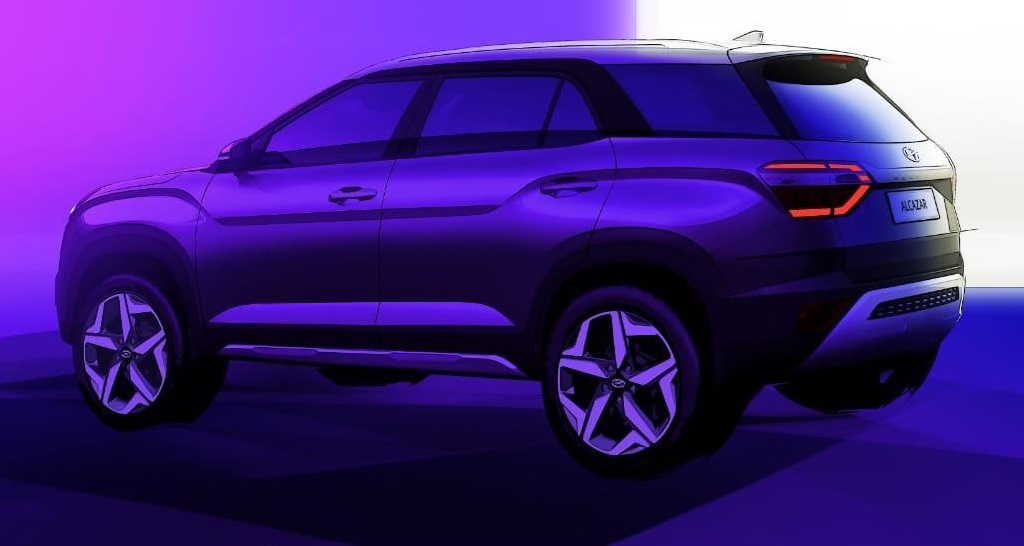
Hyundai Motor India has released the design sketches of the Alcazar 3-row SUV, today. Developed on the brand’s global design identity dubbed “Sensuous Sportiness”, the midsize SUV has a similar profile to the Creta on which it is based.

Only the side and rear three quarter view sketches of the soon-to-be launched SUV have been released for now. The car carries a very similar side profile to that seen on the Creta sporting bold character lines, and a crossover stance.

However, it is clear that the Alcazar will be longer than the 5-seat compact SUV, with the extra length utilised to accommodate the third row of seats.

The Hyundai Alcazar design sketch also reveals the new tail lamp design that looks much better than the one present on the Creta. What’s more, the tailgate has been redesigned entirely as well. But, the rear bumper is similar in design to the one on the 5-seat compact SUV.

When it comes to the glasshouse, the Alcazar looks set to receive a rear quarter glass that should help get some light in for last row occupants.

In addition, while the profile of the bonnet looks identical to the Creta’s, the front fascia seems to have been changed. There should be a new radiator grille, bumper and different lighting units on the car.

Inside, like speculated earlier, the Hyundai Alcazar design sketch reveals a dashboard taken straight out of the Creta, which is no bad thing.

But, in the Alcazar, customers can opt for captain’s chairs in the second row and they come with their own dedicated centre console equipped with an armrest and some stowage.

According to Hyundai, there is ample room for occupants in both second and third rows and the design sketch implies the same. But, look carefully and it is evident that the second row seats are placed a touch forward in the sketch.

Surprisingly, Hyundai has even left some space behind the third row of seats for luggage, but there does not seem to be enough space for a spaniel.

To make its debut soon, the Alcazar will make use of the Creta’s engine and gearbox choices. It should cost more than the 5-seat compact SUV it is based on, but should make up for it by being a more premium product.

Hyundai Sells Over 10,000 New-Gen Cretas Each Month For Last One Year

It’s been exactly an year since Hyundai launched the second-gen Creta in India on March 16, 2020, just before the COVID-19 lockdown. Hyundai has now announced that the new-gen Creta has recorded over 1.21 lakh unit sales in India in an year’s time. Since the Creta was first launched in India in 2015, the company says that it has sold over 5.8 lakh units in the domestic market. And as for exports, Hyundai has managed to ship 2.16 lakh units of the Creta from India to other countries.

Hyundai has also revealed that higher-spec variants of the Creta – particularly the SX and SX(O) – are drawing in the majority of buyers, with as much as 51% of Creta buyers opting for these two variants. Feature loaded interiors are always a huge draw for Hyundai cars. Top-spec SX and SX(O) trims come equipped with features such as a 10.25-inch touchscreen infotainment system with Android Auto and AppleCarPlay, wireless charging, a panoramic sunroof, LED headlights, alloys wheels, rear disc brakes, and much more.

The SX(O) variant further adds features like four airbags, leatherette upholstery, ventilated front seats, a full-digital instrument cluster, an electronic parking brake, hill-start assist, and ESC. Prices for the Creta SX start at INR 13.80 lakh* the petrol variant. The SX(O) variant, meanwhile, tops out at INR 17.49 lakh* for the diesel-automatic variant. Waiting period for these two variants range between 6-12 weeks, depending on the configuration. While most manufacturers are going the petrol-only route, Hyundai has also revealed that as many as 60% of all Creta buyers have opted for the diesel variants, in spite of their higher asking price.

This proves that there is still a huge demand for diesel vehicles in India. The 1.5L diesel engine on the Creta produces 115hp and 250Nm of torque. Prices for the Creta diesel variants range between INR 10.31 lakh to INR 17.49 lakh*. The company also revealed that over 20% of the buyers have opted for automatic variants. That number is surprisingly low given that Hyundai offers as many as three automatic gearbox options for each of the three engines – a torque converter automatic for the 1.5L diesel, a CVT automatic for the 1.5L NA petrol and a 7-speed DCT for the 1.4L turbo-petrol engine. The Hyundai Creta rivals the likes of the MG HectorKia Seltos and Nissan Kicks.

Toyota Fortuner | The Undisputed King of the SUVs

When Toyota Fortuner launched in 2009, Toyota was certainly riding high on the success of the Innova.

The Indian automotive industry was growing and one segment which showed potential was- SUVs. The bulky cars which were able to tread any roads, comfortable, sort of luxury and looked dominant. the car came to India to satiate the SUV demand. Toyota Fortuner had already made its name in the South East Asian market and the Middle-East. It had all the characteristics to capture the Indian market.

After the Innova’s success, Toyota had gathered some much-required goodwill in the diesel engine arena. Toyota had already been looking at the Indian market to launch the Fortuner. The market was ripe, the brand had a good image, the car was good. So, now all it had to do was, hit the hammer when the iron was hot.

On August 25, 2009, Toyota launched the Fortuner in India. The car was significant for SUV lovers. It had to compete with the likes of the Mitsubishi Pajero and the Chevrolet Captiva which were currently present in the market.

About the Car | First-Gen Toyota Fortuner

The first-gen Toyota Fortuner was launched with a 3.0-litre engine. This diesel engine generated 171 PS of power, churning out 343 Nm of torque. The car came with an all-time all-wheel-drive system giving it an extra edge over the other SUVs. It was launched a humble manual transmission back then.

To add to its SUV characteristics, the 17′ inch alloys which gave the car a dominating stance. All in all the SUV became a new rage in the Indian car markets. Toyota had expected to capture 50% market share through the Fortuner. What might have felt a bit overambitious, turned out to be a piece of cake. The SUV went on to capture 75 % market share in the SUV market.

The Sequel | Second Gen

Toyota had done it again. It took it’s time and hit the iron at the right time.

The Toyota Fortuner was selling itself around the country. So, seeing this overwhelming response, Toyota decided to give it’s star car a makeover. In November 2016, the second generation Toyota Fortuner arrived. However, things seemed a bit tumultuous.

Delhi had been experiencing it’s worst pollution levels in 2016. This led the Delhi Government mulling banning of diesel vehicles in the city. Apparently, diesel vehicles had become the villain now. To top that off, came demonstration. It seemed quite certain that the launch was a huge mistake.

This made Toyota come up with a 2.7-litre petrol engine. The new Fortuner came with a set of gizmos and a plethora of electronics. But it still lacked behind some of its rivals because of the ride quality.

Toyota Factor

Indians are crazy for all things Japanese when it comes to cars. Moreover, Toyota had created goodwill because of the success of the Innova and Qualis. Internationally, Toyota was already known for its ruggedness, and the Fortuner seemed to be a gateway to those rugged cars in India. People wanted to taste what all the fuss was about. And those who did didn’t regret it.

Resale value

Toyotas always tend to have a high resale value. This isn’t a big mystery of any sort. It’s simply because of the low maintenance. Toyota cars are known for their durability which means lesser wear and tear. So much so, in a study done by CarWale, it was found that Fortuner held 85 % resale value even after three years. Yes, the car was expensive but it was worth it, literally.

Maintenance

The maintenance costs of a Toyota Fortuner can bring even the smaller hatches to shame. Toyota’s after-sales service is known for its quality, durability and reliability. Moreover, lesser break downs amount to lesser repairs, which kept the car intact for a long long time. This might not be the same scenario when it comes to its arch-rival, the Endeavour.

Power and mileage

You need the power to drive through that treacherous off-road trail, you got it. You need mileage while driving through the city roads, you got that too. Fortuner feels to be everyone’s car. The GD series engines in the Toyota Fortuner come with ESTEC technology (Economy with Superior Thermal Efficient Combustion). This gives the car a rather greater edge over its competitors.

The Toyota Fortuner came and it conquered. And Toyota Fortuner has been here since a decade now.

All it can be said about the Toyota Fortuner is that you can love it, you can hate it but you cannot ignore it. Yes, the car has its own set of imperfections, but so do the best of the cars. But some cars are worth ignoring the minor imperfections, and looking at the bigger picture.

Toyota Fortuner is certainly one of them.

Design a site like this with WordPress.com
Get started